
A Bit About Me
Hey, I'm Tyler. I run Rousseau Plant Care and I love figuring out better ways to grow plants indoors.
A while back, I realized that while staghorn ferns and mounted epiphytes look incredible, watering them is usually a huge chore. I wanted to design something that actually made keeping them clean and easy without ruining your walls.
What are Staghorn Ferns?
Before we talk about mounting setups, it helps to understand how these bizarre, beautiful ferns grow in the wild.
Canopy Dwellers
Epiphytes. Platycerium species are found naturally in the tropical canopies of South America, Africa, SE Asia, and Australia. They never touch soil; they anchor themselves directly to tree trunks high above the ground.
Shield Fronds
Basal Fronds. These round fronds tightly hug the tree to protect the roots. As they mature, they dry and turn brown (totally normal!) to act as a compost bin, catching falling leaves and water.
Antler Fronds
Fertile Fronds. These are the show-stopping, dramatic leaves that give Staghorns their name. They grow outward to absorb sunlight for photosynthesis and produce spores to reproduce. Some species stay solitary, while others form massive colonial clusters of "pups".
The "Dunk and Drain"
Staghorn Ferns are Great
They look beautiful mounted on a wall and capture a unique aesthetic that traditional pots can't match. But watering them is a widely accepted chore.
The Messy Reality
The traditional method requires taking the mount off the wall, carrying it to a sink or tub, dunking it to soak the moss, and then waiting for it to drain so it doesn't ruin your walls or floors.
High Friction
Because it is a hassle, people often delay watering. This friction leads to stressed plants, crisping fronds, and ultimately a poorer growing experience.
My Platycerium Journey
A Rough Start
I still consider myself a platycerium beginner. I've only recently felt comfortable with keeping them happy and maturing. I got my first 3 platyceriums from the 2024 Southeast Plant Show and none of them made it.
The Acclimation Struggle
They were fresh imports that I thought I could rehab and acclimate in my home in ambient conditions with a homemade pot. My first pot stayed way too wet.
Over-correcting
To offset it, I pulled back on watering—then it stayed too dry. They eventually quit growing and browned up. That wasn't enough to deter me, though. I stayed patient until I could find an established and growing plant.
Developing the Orb
I went through many prototypes before settling on the final design. The bar I set for the final Rousseau Mount was extremely high.
The Requirements
It had to look good on the wall
It had to actually function for the plant
It had to be easy to water
It had to split into two halves for easy repotting
It had to be easy to produce with my tools
"Getting all of these right at the same time is what caused the mountain of prototypes."
The Orb Mount
A reimagined approach to epiphytic mounting that eliminates the mess.
01. Top Funnel
Water is poured directly into the top. The integrated funnel guides the water into the center of the medium, preventing surface runoff.
02. The Screen
A custom front screen securely holds the plant and the growing medium in place, ensuring stability without damaging the developing roots.
03. Two-Part Design
The mount opens cleanly, allowing you to re-pack or swap out the medium easily without disturbing the core structural integrity.
04. The Bottom Reservoir
Excess water is trapped securely in the base instead of spilling onto your floor.
The Wick Effect
No More Dunking
Because the bottom half of the mount functions as a sealed reservoir, you can water the mount heavily while it is still hanging on your wall.
Wicking Upward
The reservoir catches any extra water. Throughout the day, the bottom of the moss acts like a sponge, slowly soaking that trapped water back up into the center of the mount.
Consistent Moisture
This keeps the roots happily hydrated for a lot longer, meaning you don't have to water as often—and it's completely mess-free.
Stackable Flow
Build living walls effortlessly. The mounts are designed to be stacked vertically, creating a cascading hydration system.
Pour water into the top mount's funnel.
Once the reservoir fills, excess water drips precisely into the funnel of the mount below it.
Water an entire column of plants in one pour.
Expand your display downward at any time without changing your watering routine.
The Medium
My Custom Aroid Mix
I started using this specific mix (coco chunks, tree fern fiber, perlite, pumice, fluval, and biochar) because it works so well for my aroids. I'm packing the Orb with it—so far the ferns look really happy in it and I'll continue to use it!
The Moss Indicator
Even when using my chunky mix, I always stuff a little bit of sphagnum moss right at the top funnel. This acts as a visual and tactile sensor—when the top of the moss is completely dry, I know it's time to water!
An Experimental Sandbox
The growing medium is a great place for people to experiment. Whether you stick with 100% sphagnum moss, try sandy succulent substrates, or formulate your own extreme chunky recipe—the mount framework handles it easily.
Endless Possibilities
While we designed these for Staghorn ferns, they've proven to be incredible experimental platforms for all sorts of unusual plants.
Hoyas
Cascading Hoyas look fantastic trailing out of the front mesh while utilizing the deep internal moisture reserve.
Columnea gloriosa
The "Goldfish Plant" thrives in these mounts. The reservoir acts like a slow-release sponge, giving the roots exactly the hydration they need without ever getting soggy.
Solanum uleanum
Even fuzzy, delicate semi-epiphytes like Solanum uleanum do surprisingly well once they're off the ground and have steady access to moisture.
Other Plants
Honestly, these mounts are just really fun to experiment with. Try them out with your string of turtles, random trailing pothos, or whatever other terrestrial and epiphytic plants you have lying around!
Design Variations
We expanded the collection beyond the Orb to fit different aesthetics and plant typologies.
The Wavy Mount
Provides a more organic, flowing aesthetic while functioning exactly like the Orb. Great for cascading plants that complement its curves.
The Sun Mount
Optimized front face. I use this exactly like the Cactus mount—it's great for Pinguicula (pings) and succulents. Honestly, anything that can root through the screen works great!
The Cactus Mount
Tall and rigid. Just like the Sun mount, this desert aesthetic is perfect for pings, succulents, and epiphytic cacti. If it can root through the mesh, it will thrive here.
Light & Growth Zones
A moss pole is most rewarding when the plant has enough light to actually use it.
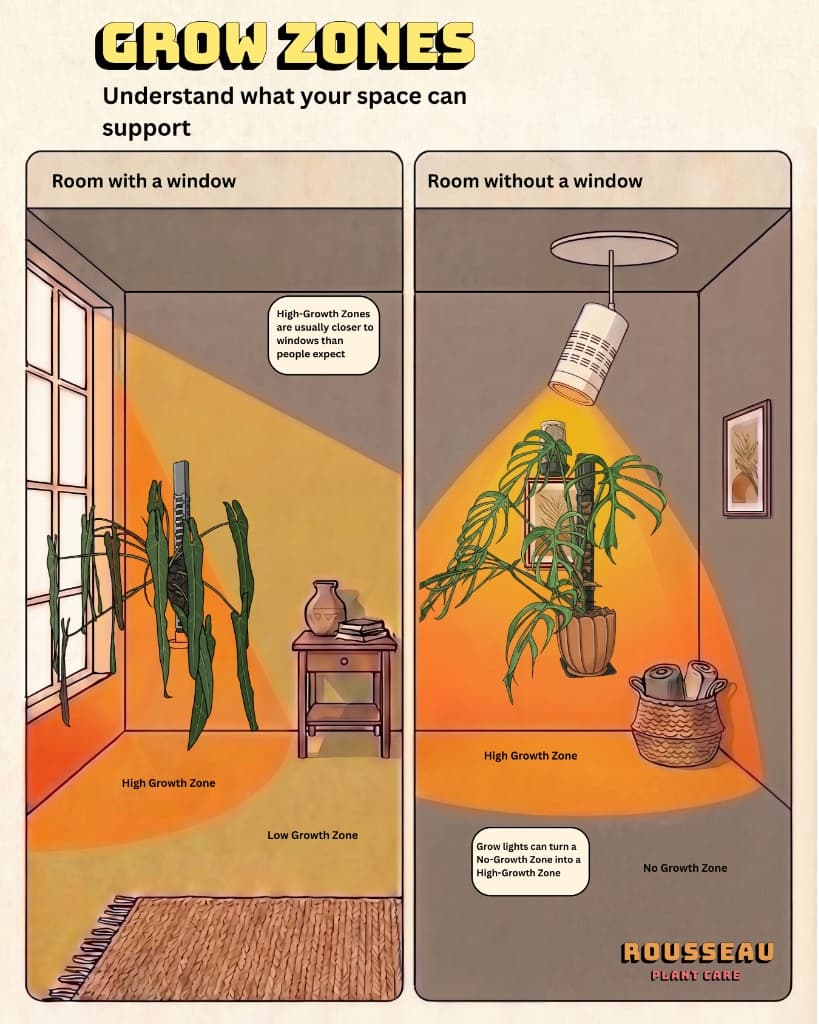
Low Growth Zone Details
Meaningful but slow growth. The plant will push new leaves, but they generally won't size up. Aroids will struggle to mature or fenestrate. Dry-down takes longer, making watering less forgiving.
May work, but slower progress and lower reward. The aerial roots will attach eventually, but the internodes may still be spread out.
If using a pole, ensure you are tethering the nodes tightly so the roots find the moss instantly. Patience required.
Let's Grow
Ready to upgrade your collection and say goodbye to the dunk-and-drain? Scan the code or grab a link below.
Questions?
I'm happy to chat about setup, medium recipes, or specific plant recommendations!